Future of Work · AI · Automation · HR technology
Published
In our research, two questions separated the companies getting extreme value from AI from the rest of the mid-market. Both are about who does what once the AI is running, and most leadership teams I work with have never answered either of ...

In our research, two questions separated the companies getting extreme value from AI from the rest of the mid-market. Both are about who does what once the AI is running, and most leadership teams I work with have never answered either of them out loud.
In The Co-Intelligent Workforce Report: 2026 Baseline, we asked mid-market leaders two questions about the workflows where AI does part of the work. How clear is the division of responsibilities between people and AI? And if an AI tool produces a wrong or harmful result, is it clear who is responsible for catching and fixing it? We call companies that answered “completely clear” or “very clear” to both questions “design-mature.”
51% of design-mature companies report that AI is extremely valuable to their business. Among companies that haven’t done that work, the number is 9%. That is a 5.7x gap, and only 48% of companies qualify as design-mature, which means roughly half of the mid-market hasn’t done this work yet.
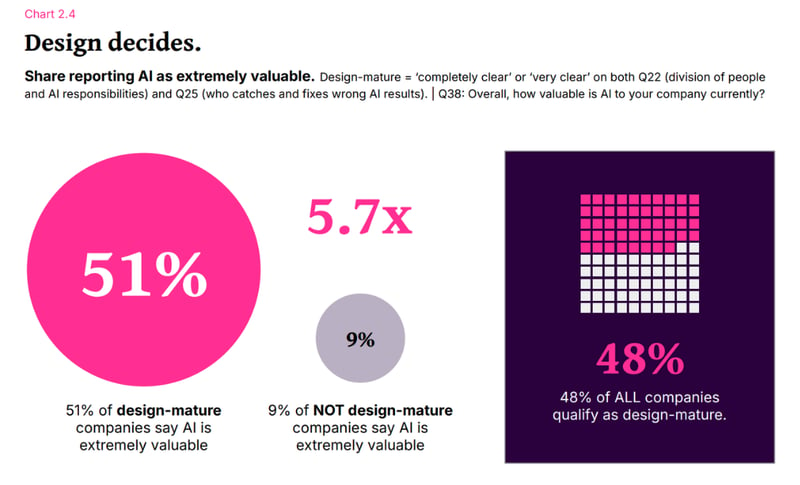
Chart 2.4 from the Co-Intelligent Workforce Report
We surveyed 484 Director-and-above leaders at US and Canadian companies with 100 to 999 employees in August and September 2026, with research strategy by Port Research and survey design and fielding by Researchscape. Like every finding in the report, this one is an association, and companies that do the design work may differ from others in ways a survey can’t isolate.
Why AI job redesign gets skipped
Getting to design maturity takes leadership attention and very little money. Someone has to sit down with each workflow AI touches and decide which work belongs to the person, which belongs to the agent, and who answers for it when the agent is wrong. The report is explicit that this requires no new platform and no larger budget, which, in my experience, makes it one of the few AI moves a mid-market company can start right away.
So why have half of companies skipped it? My read is that it looks like a policy exercise, and most companies believe they finished that exercise when they wrote an acceptable-use policy and circulated it. Cory Hymel, Head of Research at Andela, reacted to this finding for the report:
“Having a very clear line regarding what humans are accountable for versus what AI handles within individual roles, not just topline organization policy, is critical. And AI, so far, has been treated as a fire-and-forget magic wand that isn’t producing.”
Hymel’s phrase “within individual roles” is the practical test. A role design names one specific job, lists the tasks that moved to an agent and the tasks that stayed with the person, and says what that person now does with the time they got back. That page is the most direct way to make both of our survey questions answerable for every role AI touches.
What the rest of the research says
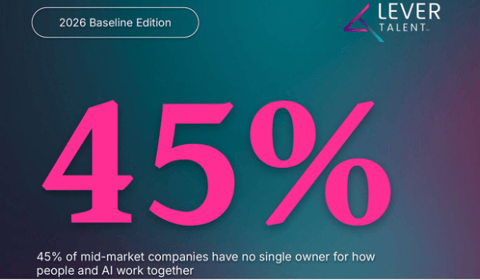
Microsoft’s 2026 Work Trend Index, built on a survey of 20,000 AI users across 10 countries, shows why individuals rarely fix this on their own. 45% of AI users told Microsoft it feels safer to focus on current goals than to redesign work with AI, and only 13% say they are rewarded for reinventing their work with AI even when the results don’t land. People will not redesign their own jobs while the system around them pays them to protect the old ones. That makes design a leadership decision, made above the level of the individual contributor.
The same report found that Microsoft’s most advanced AI users, a group it calls Frontier Professionals, are far more likely to pause before starting work to decide what should be done by AI and what should be done by a person (53% compared with 33% of other AI users). That deliberate pause is the individual version of the same decision. Design-mature companies can make it part of how roles are defined, so it no longer depends on who happens to sit in the seat.
Deloitte’s 2026 Global Human Capital Trends report, drawn from a survey of more than 9,000 business and HR leaders in 89 countries, makes the executive version of this argument. It cites separate Deloitte research with 100 C-suite leaders finding that 59% take a technology-focused approach to AI, and that those leaders are 1.6 times more likely to miss AI returns that exceed expectations than leaders who take a human-centric approach. Deloitte also poses a closely related question, asking who should have the authority to decide when an algorithm acts and when a person steps in.
Our second question, about who catches and fixes the AI’s errors, has research of its own. In July, Data & Society published The Oversight Fallacy, a primer by Samir Passi and Ranjit Singh based on fieldwork in a computational biology lab. They found that effective oversight of AI agents depends on four components: knowledge of what the system can and cannot do, observation of its actions, control over its behavior, and timely intervention when it fails. They argue that oversight has to be designed as a shared responsibility of the people who build and deploy an AI system, which lifts it off the shoulders of whichever user happens to be at the keyboard. For a leadership team, that means naming a reviewer for each workflow where AI completes work and giving that person enough visibility into what the agent did to step in early.
From co-intelligence to co-intelligent teams
Wharton professor Ethan Mollick gave us the language for this in his 2024 book, Co-Intelligence: Living and Working with AI, which frames AI as a collaborative resource for the people who use it. We borrowed his term for the title of our report because it describes what the companies getting real value have built. Our research applies the idea to how whole companies organize work: a co-intelligent team is one where people and AI agents share the work on purpose, and someone has drawn the lines between them.
Drawing those lines is the core of what I call Workforce Orchestration™, the discipline of deliberately and continuously deciding how humans and AI will share the work to be done. The person accountable for that decision is the Workforce Orchestrator™
What HR leaders should do
- Redesign one role this quarter and use it as your template. Pick a role where AI already does part of the work and write down which tasks moved to AI, which stayed with the person, who reviews the AI’s output, and who is accountable when it’s wrong. That single page becomes the model for every role that follows.
- Add the two design questions to your next employee pulse survey. Ask people whether the division of work between them and AI is clear, and whether they know who catches and fixes the AI’s mistakes. The share who can’t answer is your baseline, and it gives you a number to bring to the executive team.
- Rewrite job expectations and performance measures at the same time as the workflow. Microsoft’s finding that only 13% of AI users are rewarded for reinventing their work with AI, even when the results don’t land, points straight at HR, because HR owns the systems that decide what gets rewarded. If the role changes and the scorecard stays the same, people will keep working to the old scorecard.
- Train the people who review AI output as carefully as the people who use it. Data & Society’s four components give you a curriculum. A reviewer needs to know the system’s limits, see what it did, have the authority to stop it, and have enough time to step in before a small error spreads.
If you can’t draw who does what between your people and your AI, neither can they. The 5.7x is one finding from the report. The full Co-Intelligent Workforce Report: 2026 Baseline shows how design connects to who owns the human-AI mix, and it closes with five moves for the CEO and six for the head of HR. Download the full report here.